*Lavazza is not affiliated with, endorsed or sponsored by Nespresso
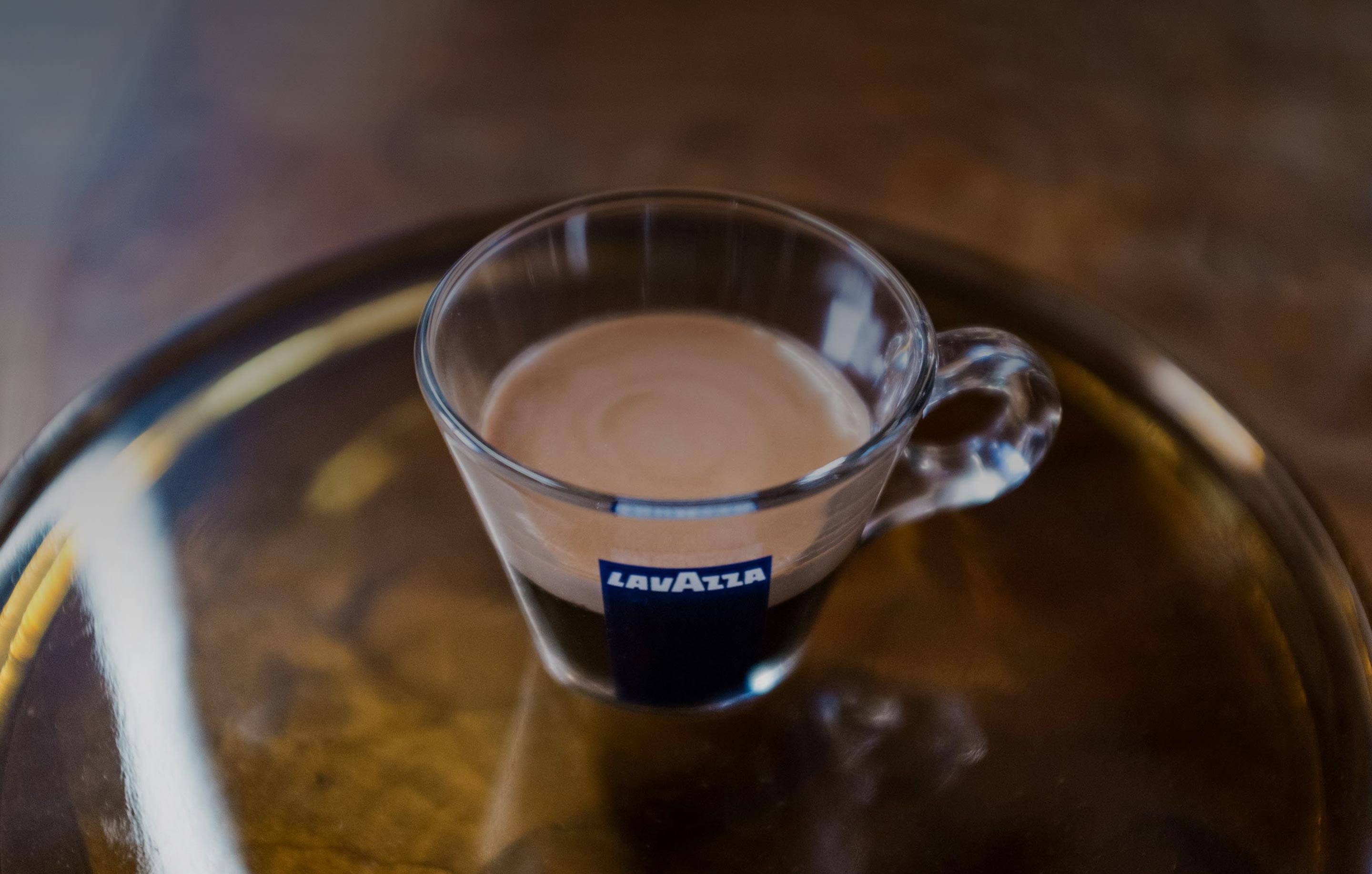
Espresso is not simply a strong coffee. It is a specific method of preparation: finely ground coffee compacted into a portafilter and forced through by hot water at high pressure, producing a small, concentrated, emulsified beverage in 25 to 30 seconds. The result is denser, more aromatic, and texturally richer than any other brew method. A well-pulled shot is topped with a layer of crema, a light-brown foam formed by CO₂ emulsified with coffee oils during extraction, that carries a large share of the drink's volatile aromatics.
Espresso was invented in Italy, refined in Italy, and for most of the 20th century, stayed there. The United States ran on drip coffee until the 1980s, when a wave of Italian-inspired espresso bars began opening in Seattle. Café Allegro, founded in 1975, was the first espresso bar in the city. By the early 1990s, espresso drinks were mainstream across the country.
Though it was becoming mainstream, there was a loss of precision. The shift came in the 2000s, as a generation of coffee professionals began applying scientific rigor to extraction: weighing doses to the tenth of a gram, timing shots with purpose, mapping flavor outcomes against extraction variables. An SCAA report estimated the US had 29,300 specialty coffee shops in 2013, up from 2,850 in 1993. Espresso brewed at home followed the same trajectory. Today, the at-home barista market in the United States is sophisticated, data-driven, and technically demanding.
For the sophisticated home barista, this guide explores the four core variables that define the perfect espresso shot.
Miscela means "blend." It refers to which species, origins, and roast levels are combined, and in what proportions.
The classic Italian espresso blend is not a single-origin Arabica. It combines Coffea arabica and Coffea canephora (Robusta). Arabica provides sweetness, complexity, and an aromatic range. Robusta contributes body, caffeine intensity, and crema.
Robusta beans retain more CO₂ after roasting and contain emulsifying compounds that produce a thicker, more persistent foam under 9-bar pressure. A blend with 10 to 30% high-quality Robusta will outperform straight Arabica in crema stability and shot body. This is not a compromise, it's a design decision.
Start with a blend roasted specifically for espresso. A light-roasted single origin developed for pourover will almost always produce a sour, underdeveloped shot. Beans should be used between 7 and 21 days post-roast: too fresh and the puck is unstable, too old and the crema collapses.
Macina means "grind." The grinder has more influence on shot quality than the machine itself.
Espresso requires a very fine, consistent grind. A blade grinder chops beans randomly and produces wildly inconsistent particle sizes. A burr grinder (flat or conical) shears beans between two abrasive surfaces and produces a uniform distribution. For home espresso, a burr grinder is the optimal choice.
Grind size is your primary dial-in tool. Finer grind means more resistance, slower flow, and longer extraction time. Coarser grind means less resistance, faster flow, and shorter extraction time. Start coarser than you think you need, then work finer in small increments until you hit your target window. Grind immediately before each shot. Do not grind in advance.
Macchina is the machine. Its job is to deliver water at the right temperature and the right pressure, consistently across every shot.
The target pressure is 9 bar. The Specialty Coffee Association defines espresso as a beverage prepared by forcing water at 9 to 10 bar through 7 to 9 grams of coffee (14 to 18 grams for a double shot) at 195°F to 205°F, in 20 to 30 seconds.
Below 7 bar, the extraction is incomplete. Above 10 bar, the shot turns harsh. Consumer machines advertised with "15-bar pumps" typically use a pressure-reducing valve to deliver 9 bar at the group head. The 15-bar figure is a pump specification, not the extraction pressure.
Water temperature should be between 198°F and 202°F at the group head. Allow a full warm-up before extracting. For machines without a temperature display, 20 minutes from cold is a reasonable minimum.
Mano is the barista's hand. It is the human skill that ties the other three M's together.
Weigh your dose every time. A scale accurate to 0.1g is essential. A standard double shot uses a 1:2 brew ratio: 18g of coffee produces 36g of liquid espresso. A variation of even 0.5g shifts extraction time by 2 to 3 seconds.
Distribute grounds evenly before tamping. Tap the portafilter gently or use a WDT needle tool to break up clumps and create a level bed. Uneven distribution is the primary cause of channeling.
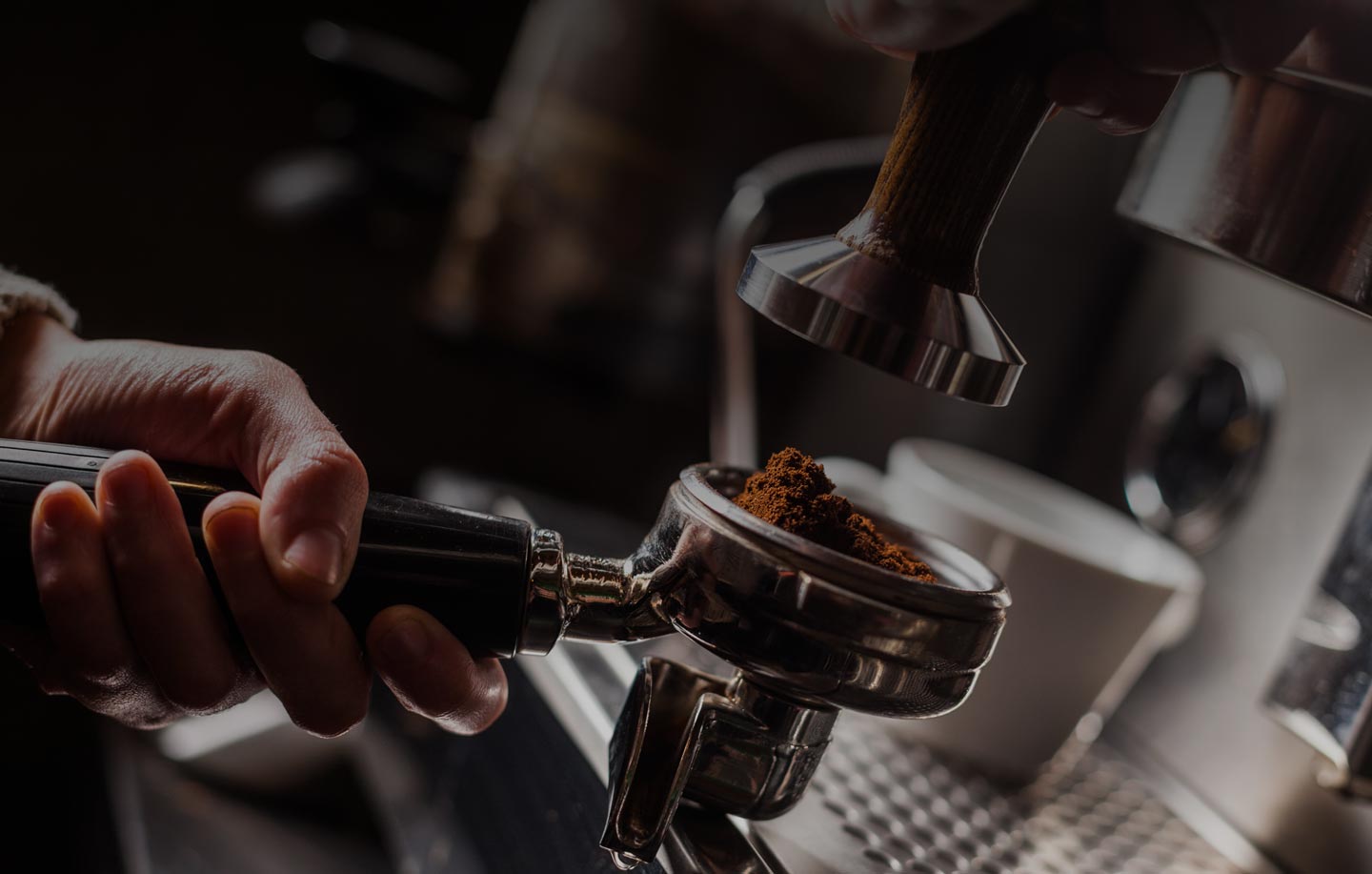
Tamp with approximately 30 lbs of downward pressure, keeping the tamper perfectly level. Then flush the group head for 2 to 3 seconds before locking in the portafilter. Lock in and start the pump immediately.
This guide uses a double shot as the reference. It is the standard extraction for almost all home espresso preparation.
What you need:
Step 1: Set your target recipe
Define your numbers before you start:
These are your starting parameters. You will adjust the grind size to hit the extraction time window.
Step 2: Weigh and grind
Weigh 18g of whole beans. Grind directly into the portafilter basket. Grind fresh, immediately before brewing.
Step 3: Distribute
Tap the portafilter gently on the counter 2 to 3 times to settle the grounds. Level the surface with a finger or distribution tool. The goal is an even bed with no high or low points.
Step 4: Tamp
Place the portafilter on a flat surface. Press the tamper straight down with approximately 30 lbs of force. The surface of the puck should be level and smooth.
Step 5: Flush the group head
Run the pump for 2 to 3 seconds without the portafilter locked in. This purges residual grounds and stabilizes group head temperature.
Step 6: Lock in and extract
Lock the portafilter firmly into the group head. Place your scale and cups under the spout and tare to zero. Start the pump and your timer simultaneously.
Watch the flow. The first drops should appear within 5 to 8 seconds. The stream should look like warm honey: viscous, smooth, and reddish-brown fading to golden blonde as extraction progresses. If it runs clear and watery from the start, the grind is too coarse. If it barely drips and sputters, the grind is too fine.
Step 7: Stop at yield
Stop the pump when the scale reads 36g. Note your total extraction time. If you stopped at 36g in 28 seconds, you are in range. If you hit 36g in 18 seconds, grind finer. If you are still below 36g at 35 seconds, grind coarser. Adjust by one small increment and pull another shot.
Always change one variable at a time. If you adjust grind size and dose simultaneously, you will not know which change produced the result.
Step 8: Evaluate and serve
A well-pulled double should show a crema layer of 2 to 4mm, lightbrown in color, that persists for at least 30 to 60 seconds. The shot should taste balanced: some sweetness, a round bitterness, and an acidity that reads as brightness rather than sharpness. Serve immediately. Espresso degrades within 30 to 60 seconds of extraction as the crema breaks down and volatile aromatics escape.
Congratulations! Now you know how to make espresso the Italian way.
A shot that reaches target yield in under 20 seconds is under-extracted. The grind is too coarse, offering too little resistance. The water passes through the puck quickly, extracting mainly the lighter, more soluble acidic compounds while leaving the sweeter, heavier ones behind. Grind finer in small increments until you hit the 25 to 30 second window. Check that your dose is correct and that the puck is evenly distributed before tamping.
A shot that takes more than 35 seconds to reach target yield is over-restricted. The grind is too fine, creating excessive resistance. Grind coarser by one small increment at a time. Also check that you are not overdosing: too much coffee in the basket leaves insufficient space for water flow.
Sour espresso results from under-extraction. The water has not pulled enough of the desirable flavors from the grounds, leaving behind harsh, acidic compounds. Causes include a grind that is too coarse, a dose that is too low, water temperature that is too low, or an extraction time that is too short. Start by grinding finer. If the shot time is already in the correct window and the taste is still sour, try raising your water temperature by 2 to 3 degrees.
Bitterness is the signature of over-extraction. The shot has drawn too many compounds from the coffee, including harsh and astringent ones. Causes include a grind that is too fine, an extraction time that is too long, or water that is too hot. Grind coarser as a first step. If you are already within the time window, try reducing your yield slightly (a 1:1.5 ratio instead of 1:2) or lower your water temperature by 2 to 3 degrees.
This is almost always channeling. Water is finding easy paths through the coffee puck instead of flowing evenly. Parts of the coffee over-extract (bitterness) while other parts under-extract (sourness), producing a confused shot. Improve your distribution before tamping. Use a WDT tool to break up clumps, ensure the puck surface is level before you tamp, and tamp perfectly straight. A naked (bottomless) portafilter makes channeling visible immediately.
Thin crema usually indicates one of three things: coffee that is too old (past 4 to 6 weeks from roast), a machine that is under-temperature or under-pressure, or a grind that is too coarse. Check your bean freshness first. If beans are fresh, verify your machine is fully warmed up and extracting at the correct pressure. A blend that includes Robusta reliably increases crema stability and density.
Ambient humidity affects how grounds compact and how the puck behaves under pressure. On humid days, grounds absorb moisture and compact more densely, slowing extraction. On dry days, the same grind setting produces a looser puck and a faster shot. Professional baristas dial in their grind every morning. At home, adjust by a small increment in response to whether the shot ran fast or slow the previous day.
After every shot, knock out the puck, rinse the portafilter basket under hot water, and wipe dry. Coffee oils go rancid quickly and will contaminate the next shot with stale, harsh flavors. Backflush the group head with water weekly, and use a dedicated espresso cleaning product monthly.
You can, but the results will be significantly less consistent. Ground coffee loses CO₂ and volatile aromatics rapidly after grinding. The difference between freshly ground and pre-ground is not subtle: it is the difference between a shot with crema and aromatic complexity and one that is flat and under-performing. If a grinder is not accessible, buy pre-ground espresso coffee in vacuum-sealed packaging and use it quickly after opening.
A single shot uses 7 to 9g of coffee and yields approximately 14 to 18g of liquid at a 1:2 ratio. In practice, most home baristas work exclusively with doubleshots. A larger puck is more forgiving of minor technique inconsistencies. A 7g single shot is challenging to dial in accurately at home. Start with the double and work from there.
It depends on the machine. On the market, you can find small machines for home use very similar to the one coffee shops use. However, they require a lot of care and attention to brew a perfect cup.
If you want to achieve a bolder coffee but don't want to invest in an espresso machine, you can try using a Moka Pot or a French Press. The result won’t be as bold as the coffee you can brew with an espresso machine, but it can be just as delicious.